


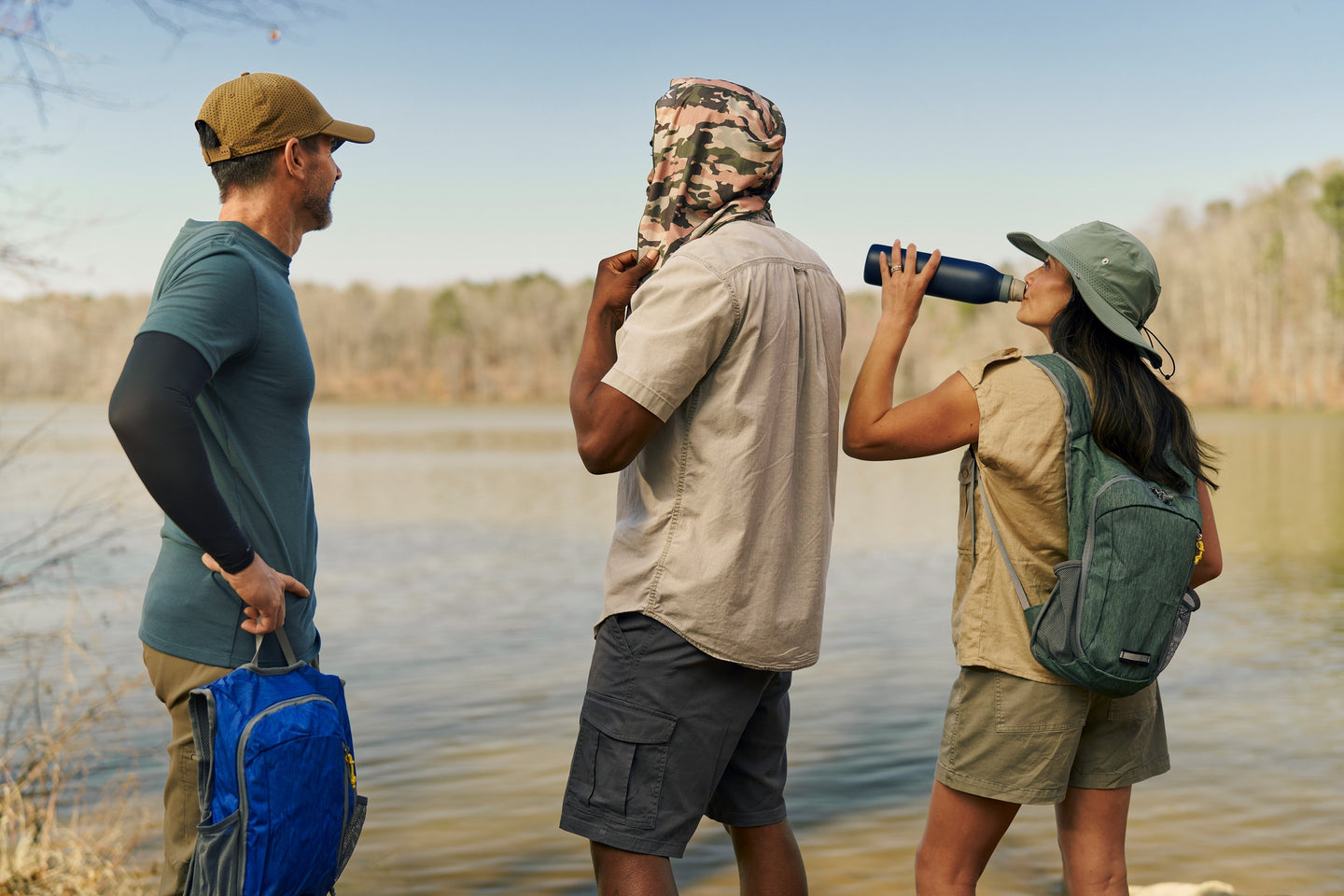
The temperature reading on your phone says 98°F. You're 20 minutes into a run, a shift, or a round of golf, and your shirt is already soaked through. Standard athletic wear wasn't built for this. It moves sweat around but doesn't lower your skin temperature, and once it's saturated, it stops doing even that.
Cooling gear for extreme heat works differently. The right gear uses the physics of evaporation to pull heat away from your body before it builds up. Here's what the science actually supports, and what to look for before you buy.
Why Regular Athletic Wear Falls Short in High Heat
Standard moisture-wicking fabric is designed to pull sweat away from your skin and spread it across the surface of the fabric so it can evaporate. That works reasonably well in mild conditions with a breeze.
In extreme heat, the problem compounds. When air temperature is close to or above body temperature, the National Oceanic and Atmospheric Administration notes that your body loses its ability to cool efficiently through radiation alone. Sweat becomes your primary cooling mechanism, and if the fabric can't accelerate evaporation, you overheat faster.
Standard wicking fabric manages moisture. Evaporative cooling fabric does more: it cools well below the surrounding air temperature and draws heat away from your body. The distinction matters when the heat index climbs above 103°F.
How Evaporative Cooling Technology Actually Works
Evaporative cooling is a thermodynamic process. When water evaporates from a surface, it draws heat energy away with it. Your body does this naturally through sweat. Engineered cooling fabrics are designed to make that process faster and more sustained.
MISSION's evaporative cooling fabric works when you wet it, wring it out, and wave it to activate the cooling effect. The fabric reaches temperatures as low as 30°F below the ambient air temperature and stays cool up to two hours per activation. That isn't a marketing estimate. It's a measurable drop in surface temperature you can feel within 60 seconds.
The key is the fabric's construction. The weave increases surface area without adding bulk, which means more water is distributed across more of the material. More surface area equals faster evaporation equals more heat pulled from your skin.
Cooling Gear for Extreme Heat: What Types Are Worth Using
Not all cooling gear performs the same way in the heat. Here's how the main categories break down by use case.
Cooling towels are the most versatile starting point. Wet the towel, wring it out, wave it in the air, and drape it across your neck or shoulders. The neck is a high-priority cooling zone because it's close to major blood vessels. Cooling the skin there helps your whole body feel the effect faster. Browse MISSION cooling towels if you're looking for an entry point into evaporative cooling gear.
Cooling shirts and tops are the right call for sustained heat exposure. With our shirts, your sweat triggers a cooling effect: as you heat up and perspire, the fabric speeds evaporation across a large surface area, drawing heat away from your body. That matters for outdoor workers, runners doing long efforts in the heat, and anyone spending more than an hour outside without consistent shade. Shop MISSION cooling shirts.
Cooling headwear targets a different problem. Your head loses heat, but it also absorbs radiant heat from direct sun. A cooling hat or cap reduces both. It uses evaporative-cooling fabric to draw heat away while shading your face and neck. MISSION makes them in vented and non-vented styles, so you can choose based on breathability or coverage.
Cooling sleeves and neck wraps are practical for people who want targeted coverage that stays in place during activity. Gardeners, cyclists, and outdoor workers rely on these because they don't shift or restrict movement while you work. These products are designed with UPF 50 fabric that blocks 98% of the sun’s harsh UV Rays, with cooling right where you need it. Shop MISSION cooling sleeves and gaiters.
How to Get Consistent Cooling Performance From Your Gear
The activation process is short, but doing it correctly makes a measurable difference in how long the cooling effect lasts.
- Wet the fabric fully. A light mist won't load enough water into the weave to sustain the evaporation cycle.
- Wring it out firmly. Excess pooling water doesn't evaporate as efficiently as water distributed through the fabric.
- Wave the item for 10 to 15 seconds to start the evaporative process before wearing it.
- Re-wet when the cooling fades. In dry heat, evaporation is faster, so you may need to re-activate every 45 to 60 minutes. In high humidity, the cycle slows because the air is already saturated with moisture.
Humidity is the variable most people underestimate. At 90°F with 20% humidity, evaporative cooling works fast and stays active longer. At 90°F with 80% humidity, the physics still apply, but the rate slows. In extreme humidity, pair your cooling gear with increased hydration and shade breaks, not just the gear alone.
Layering and Combining Cooling Gear for Longer Sessions
For outdoor activities that last more than two hours, one piece of cooling gear is a starting point, not a complete plan.
A cooling shirt combined with a cooling towel around the neck gives you overlapping coverage. The shirt cools continuously off your own sweat, while the towel delivers a stronger burst you can refresh by re-wetting it. Between the two, you're never relying on a single piece to carry the whole session. Cooling headwear adds a third layer of protection for direct sun exposure.
The Occupational Safety and Health Administration recommends scheduled cooling breaks for outdoor workers in heat index conditions above 103°F, regardless of what they're wearing. Cooling gear extends the time you can spend in the heat comfortably, but it works best as part of a broader heat management plan that includes hydration, rest intervals, and shade access.
For structured activities like trail running or golf, plan your towel re-wet points around water stations, water features on the course, or the contents of a small spray bottle in your bag.
What to Look for When Buying Cooling Gear for Extreme Heat
Generic "cooling" labels appear on a lot of products. Here's how to read past the marketing.
- Activation method: True evaporative cooling fabrics require moisture to activate. If a product claims to cool without any, then it's likely using a different mechanism, usually a phase-change material or basic breathability, not evaporative cooling.
- Surface temperature drop: Look for a stated temperature reduction, not just "cooling feel." A measurable drop of 20°F to 30°F below ambient is achievable with quality evaporative cooling fabric.
- Duration: Products that stay cool up to two hours per activation give you enough working time for most outdoor activities without constant re-wetting.
- UPF rating: If you're working in direct sun, cooling alone isn't enough. A UPF 50+ rating means the fabric blocks more than 98% of UV radiation, per The Skin Cancer Foundation's fabric protection guidelines.
- Wash durability: Check whether the cooling holds up after repeated washing, and how the cooling is created in the first place. The best cooling is built into the fabric itself through physics, not a chemical treatment applied on top. Chemical-based coatings wear off, and many can't be washed at all without losing their effect.
The right cooling gear for extreme heat doesn't ask you to tough it out. It uses physics to work with your body's cooling system instead of leaving it to manage the heat alone. Start with the piece that covers the activity you're already doing, get the activation right, and build from there.
Explore MISSION's full range of evaporative cooling gear to find gear matched to your specific use.